
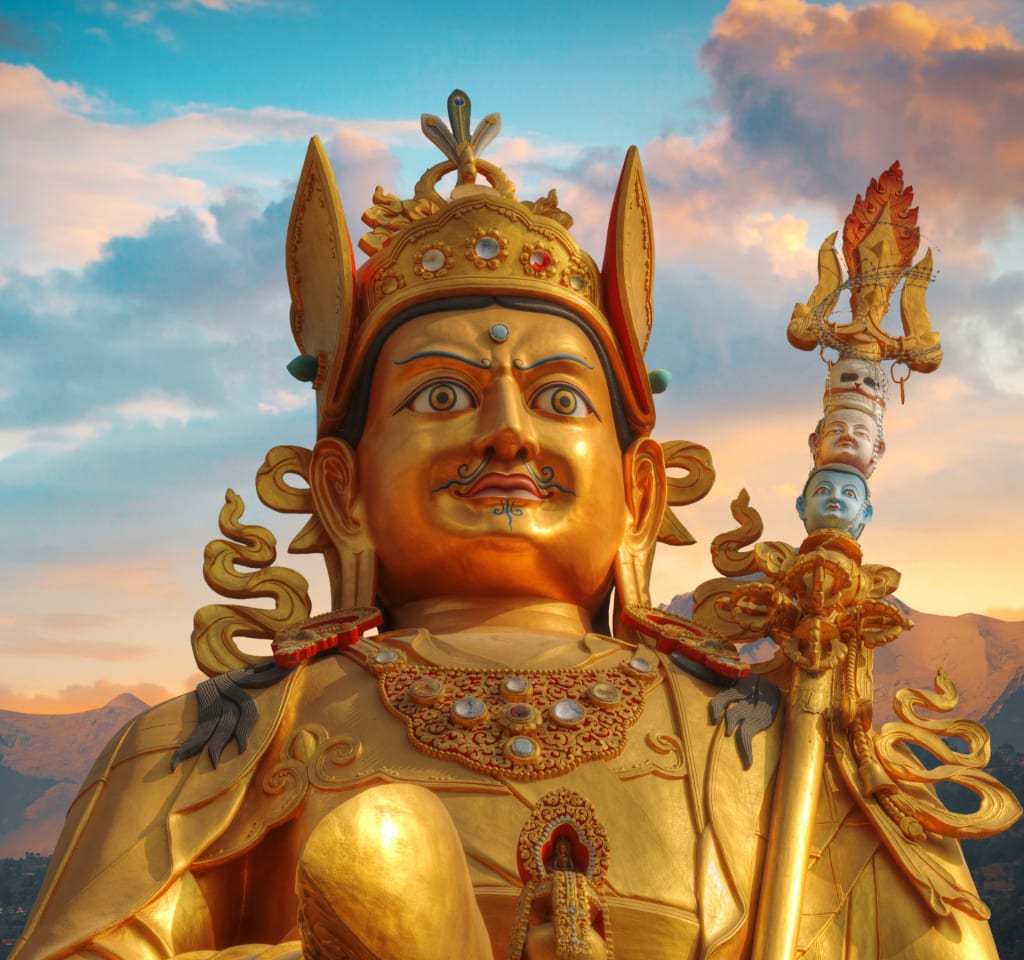
Bodhisattva Mei Ling
The Buddha of Transmutation: Ancient spiritual guide behind Modern Pranic Energy Healing
Bodhisattva Mei Ling: A Guide of Inner Wisdom and Transformation
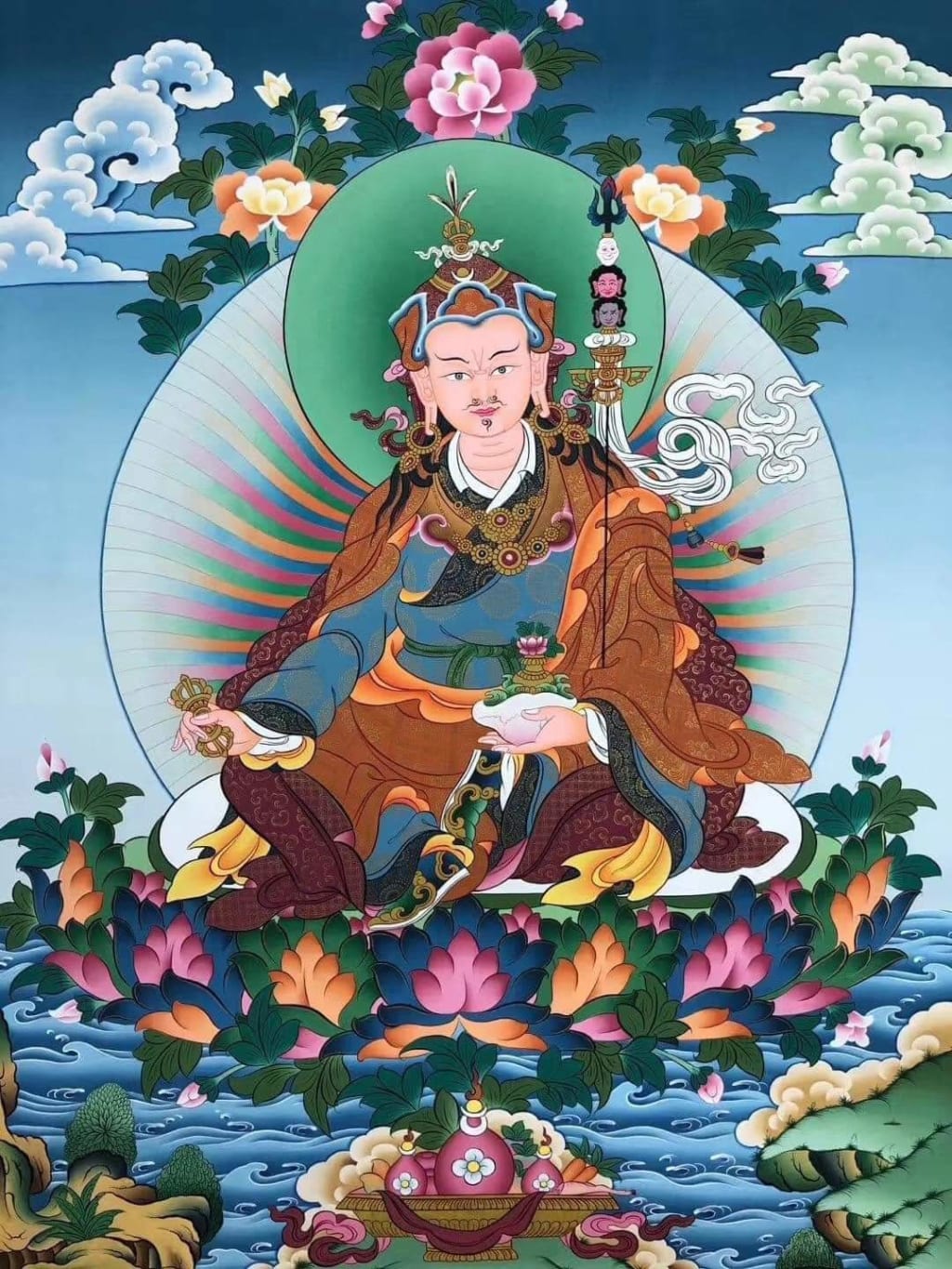
Bodhisattva Mei Ling, also revered within this lineage as Lord Padmasambhava or Guru Rinpoche, is honoured as an ancient spiritual guide connected to the inner stream of Modern Pranic Energy Healing.
According to tradition, Lord Padmasambhava appeared in a lotus blossom in Uḍḍiyāna, often associated with the Swat Valley region of present-day Pakistan. He is remembered in Tibetan Buddhist tradition as Guru Rinpoche, the “Precious Guru,” a master associated with the establishment of Vajrayana Buddhism in Tibet. His legacy is connected with transformation, inner discipline, the overcoming of obstacles and the understanding that spiritual practice must be lived, not only studied.
Within the Pranic Energy Healing tradition, Maha Atma Choa Kok Sui is understood to have received inner guidance and spiritual instruction through meditative contact with Bodhisattva Mei Ling during the early development of the system. These teachings, now shared internationally, bring together practical energy techniques, spiritual discipline and the grace of a living lineage.
The Lineage We Honour
A Guide of Transformation
Padmasambhava is remembered as a master of transformation. In Tibetan Buddhist tradition, his life is associated with the ability to face obstacles, purify difficult conditions and transform challenging forces into part of the spiritual path.
Within PEH Africa, this principle is honoured through the way we teach energy awareness, self-responsibility and inner discipline. Transformation is not presented as something mysterious or dramatic, but as a sincere process through which human beings learn to clear what burdens them, strengthen what is wholesome and live with greater balance.
The Precious Guru and the Second Buddha
In Tibetan Buddhism, Padmasambhava is known as Guru Rinpoche, meaning the “Precious Guru.” In the Nyingma tradition, he is also honoured as the “Second Buddha” because of his role in helping establish Vajrayana Buddhism in Tibet.
For students, this points to the importance of wisdom that is practical, embodied and lived. Spiritual teaching is not only preserved in books or rituals; it is preserved through conduct, practice, service and the transformation of daily life.
The Lotus-Born Teacher
Padmasambhava is traditionally known as the “Lotus-Born.” The lotus is a powerful spiritual symbol because it rises from the mud without being stained by it. In this sense, his story speaks to the possibility of inner purity, awakening and strength even in difficult conditions.
This symbolism is deeply meaningful for a healing path. It reminds us that pain, confusion and limitation do not have to be the final story of a person’s life. With sincere practice, right guidance and inner effort, what is heavy can gradually become a doorway into wisdom.
A Lineage of Wisdom, Practice and Service
For PEH Africa, lineage is not presented as something hidden, secretive or exclusive. It is understood as a living responsibility to preserve the teachings with respect, practise them with humility and share them in a way that serves the wellbeing of people and communities.
This is why our work brings together healing, education and service. The value of a lineage is not only in where it comes from, but in how it is carried forward.

Why Understanding This Lineage Matters
A lineage is not only a history of where teachings come from. It is a living responsibility passed from teacher to student through study, practice, discipline and service.
For PEH Africa, this lineage reminds us to teach with humility, preserve the integrity of the work and carry healing into communities with care.
Explore the Full Lineage
Learn more about the teachers and guides honoured within this living stream of wisdom, healing and service.